
Roberta Bondar Facts & Accomplishments
Did you know that March is Youth Science Festival Month? The Canada-wide festival takes science, technology, engineering and mathematics out of the classroom. Over 500,000 youth across Canada showcase their real-world solutions to their peers and community. The top young scientists will earn the right to compete in the Canada-Wide Science Fair, competing for a million dollars’ worth of awards, prizes and scholarships. Click here for more information regarding your regional local fair. As a part of our Youth Science Festival Month celebrations, we want to highlight a Canadian scientist who pushed the boundaries of our knowledge and created an innovation culture. This post will focus on facts about Roberta Bondar, Canada’s first female astronaut and neurologist in space, and her accomplishments in the science community.
Do you want to help your students learn more about Roberta Bondar? Download this printable fill-in-the-blanks worksheet to share with your students. All of the answers can be found in this blog!
Roberta Bondar Facts - The Early Years
Roberta Bondar was born on December 4, 1946 in Sault Ste-Marie, Ontario. Her dream was always to go to space: “When I was eight years old to be a spaceman was the most exciting thing I could imagine.” Bondar spent so much time studying science and conducting experiments that her father built her a laboratory in their basement. In high school, Bondar participated in a science fair. This led to asummer job at what is now called the Great Lakes Forestry Centre, where she studied the spruce budworm, the most destructive native insect in the coniferous forests of Western North America. She continued her work in science and graduated from the University of Guelph with a Bachelor of Science in Zoology and Agriculture in 1968. In 1974 she earned a Doctorate Degree in Neurology from the University of Toronto and a Doctor of Medicine Degree from McMaster University in 1977.
Career as an Astronaut
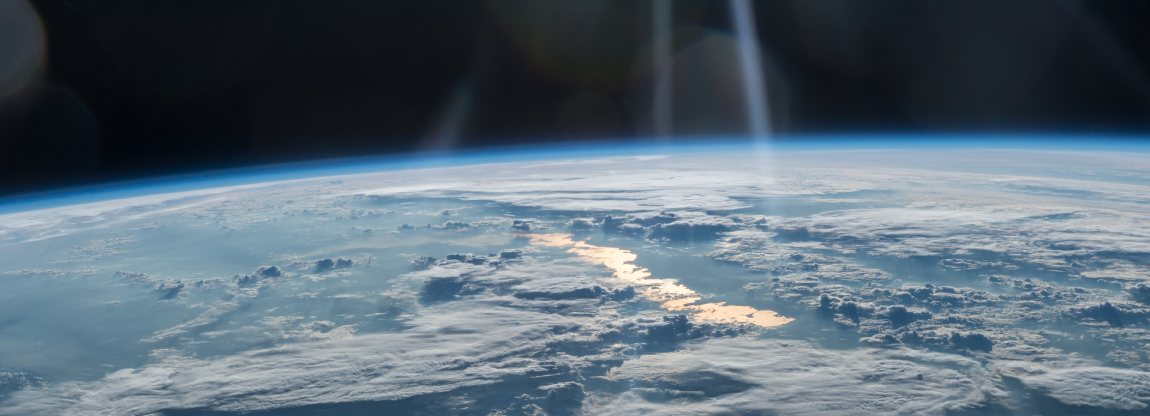
In 1984, Bondar was selected by NASA as one of the six original Canadian astronauts. On January 22, 1992, her childhood dream to be an astronaut was realized when she launched from Earth aboard NASA’s space shuttle Discovery as the first neurologist in space and the first Canadian woman astronaut. The mission lasted eight days, one hour, fifteen minutes and forty-three seconds. On the mission, Bondar and her team conducted experiments to explore the effects of weightlessness on living organisms. The team performed research on eggs and bacteria to study the effects of microgravity on life forms. The shuttle completed 129 orbits around the Earth before landing on January 30, 1992.
Bondar's Research and Achievements
During her time at NASA, Bondar led an international space medicine research team, finding connections between astronauts recovering from the microgravity of space and neurological illnesses on Earth like Parkinson’s disease and stroke. Bondar is a holder of the NASA Space Medal and was inducted into the International Women’s Forum Hall of Fame and Canadian Medical Hall of Fame for her ground-breaking research in space medicine. She has twenty-four honorary doctorates from Canadian and American Universities and holds medical licenses in New Mexico, Ontario, and is a Canadian Board Certified Neurologist. Roberta Bondar is one of the thousands of Canadian scientists who have influenced the course of scientific research. By learning the about Roberta Bondar's accomplishments and contributions, as well as those of other STEM leaders in Canada, we can encourage our students to achieve their goals and be innovators.